I’m currently a Leverhulme Early Career Fellow at the University of Manchester, where I’m working on a research project about lesbian writing and representation in mid-twentieth-century “middlebrow” fiction. Falling as it does between the construction of a modern lesbian identity in the 1920s and the politics of visibility and “coming out” from the late 1960s, the mid-century challenges many of our dominant ways of understanding lesbian genders and sexualities. In this period, we find ways of thinking about (what we might now call) lesbianism and/or transmasculinity that refuse or unsettle the values that came to define queer politics.
My research problematises hierarchies of artistic value in queer culture, spotlighting writing that might be conventional, flawed, or just plain bad, and integrating this into the queer literary history of the twentieth century. Through this questioning of aesthetic categories, “middlebrow” fiction gives us a space to think through how lesbians have been invested in conservatism, individualism, racism, classism, misogyny, privacy, and respectability. By making this unheroic queer tradition visible, we have a better chance of tackling its afterlives in the present.
Writers who interest me include Mary Renault, Josephine Tey, Pamela Frankau, Daphne du Maurier, Angela Thirkell, Agatha Christie, Nancy Spain, E.F. Benson, Barbara Pym, Naomi Mitchison, Dorothy L. Sayers, Hope Mirrlees, Nancy Mitford, Sylvia Townsend Warner and E.M. Delafield.
I am always interested in hearing about potential collaborations and I welcome invitations to speak, write, chair or facilitate workshops.
Feel free to get in touch at naoise.murphy@manchester.ac.uk or find me online @naoisemurphy.
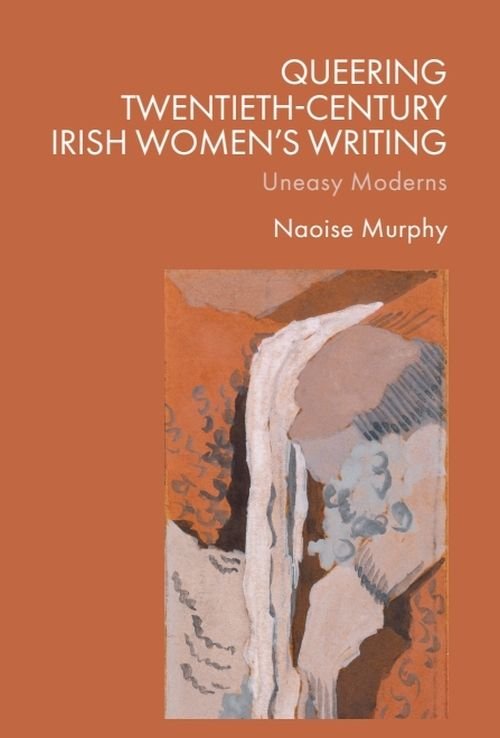
My first book, Queering Twentieth-Century Irish Women’s Writing: Uneasy Moderns, was published in 2025 by Edinburgh University Press. Bringing together a group of untimely, queerly-oriented writers — Dorothy Macardle, Kate O’Brien, Elizabeth Bowen and Molly Keane — this book disrupts common-sense narratives of modernisation, gender, sexuality and race in postcolonial Ireland. Lingering with unease and discomfort in the work of mid-twentieth-century women writers and the spaces they occupied, it pays close attention to inadmissible feelings of loss, anxiety, hauntedness and melancholia. By embracing discomfort, it moves towards a less idealising form of queer studies that is more responsive to the complexity of queer history, and offers a new story of Irish culture in the twentieth century.
I received my PhD in Multi-disciplinary Gender Studies from the University of Cambridge Centre for Gender Studies in 2023 and I have taught English at the University of Cambridge, Maynooth University, and the University of Oxford.
Writing
Queering Twentieth-Century Irish Women’s Writing: Uneasy Moderns, Edinburgh University Press, 2025.
‘Listening to Queer Ghosts.’ In Jeremy Chow and Declan Kavanagh (eds.), The Edinburgh Companion to Queer Reading, Edinburgh University Press, 2024.
‘Book review: Modernism in Irish Women’s Contemporary Writing: The Stubborn Mode.’ Irish University Review 54(2), 2024, 399-402.
‘Book review: Misfit Modernism.’ The Modernist Review 52, 10 June 2024.
‘Camp Comedy and “Submerged Trouble”: Molly Keane’s Queer Collaborations.’ English Studies 104(6), 2023, 1097-1117.
‘The Queer Transnational in Kate O’Brien and Elizabeth Bowen.’ Review of Irish Studies in Europe (RISE) 5(1), Special Issue: Irish Sexual Liberation and its Literature - Part 1. ‘Speaking out/ when it’s dangerous’, 2022, 8-27.
‘Kate O’Brien: Queer Hauntings in the Feminist Archive.’ Journal of Feminist Scholarship 19 (Fall), 2021, 80-91.
‘Queering history with Sarah Waters: Tipping the Velvet, lesbian erotic reading and the queer historical novel.’ Journal of International Women’s Studies 22(2), 2021, 7-18.
‘The Right to Dream: Gender, Modernity, and the Problem of Class in Kate O’Brien’s Bourgeois Bildungsromane.’ Irish University Review 49(2), 2019, 276–289.